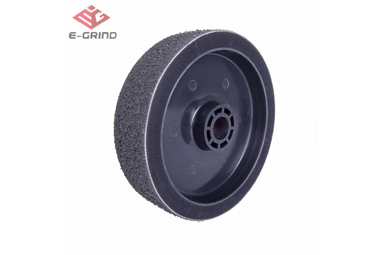

Table of Content
[Hide]
If you are struggling with workpiece burn, poor surface finish, frequent wheel dressing, or inconsistent grinding results, picking the correct superabrasive wheel bond, grit size and concentration is the key.
Superabrasive grinding wheels deliver high precision and long service life, but performance heavily depends on matching the wheel specification to your actual working conditions.
Four Main Bond Systems: Resin, Vitrified, Metal, Electroplated
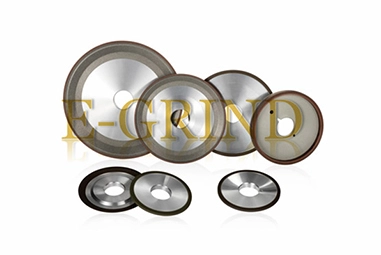
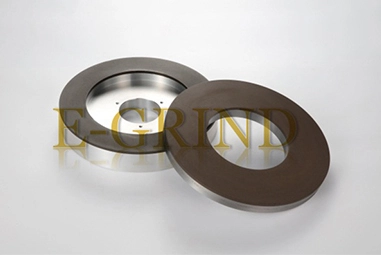
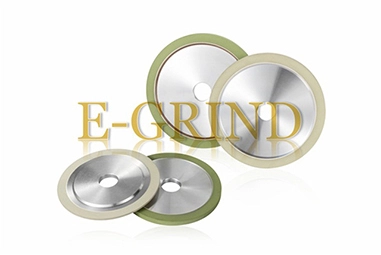
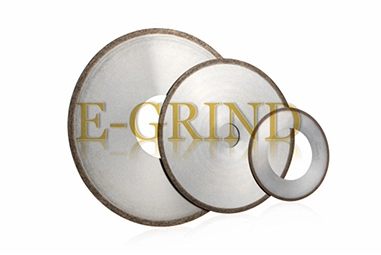
Resin Bond Superabrasive Wheels
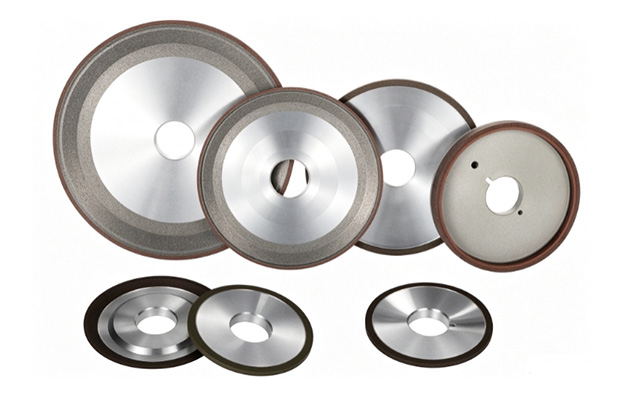
Features & advantages: Good self-sharpening, low grinding heat, excellent finishing ability, less risk of workpiece burn, easy dressing.
Suitable applications:
For grinding brittle materials including carbide, ceramic, glass, ferrite, sapphire, and finishing of hardened alloy steel.
Widely used for internal grinding, cylindrical grinding, and surface grinding and sharpening cutting tools.
The bond elasticity helps reduce workpiece edge chipping, suitable for finishing or polishing operations requiring controlled surface roughness.
Limitation: Not ideal for heavy-stock roughing or continuous high-temperature dry grinding.
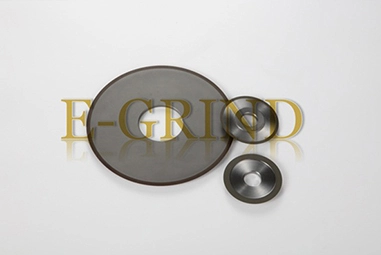
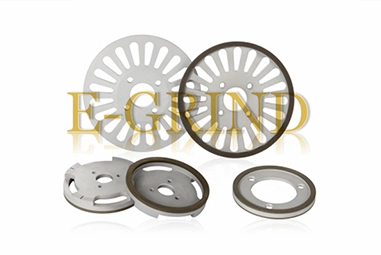
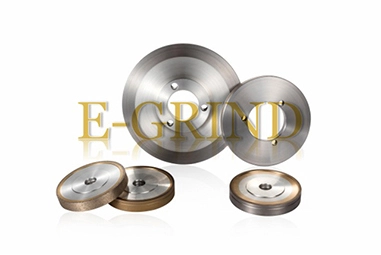
Vitrified (Ceramic) Bond Superabrasive Wheels
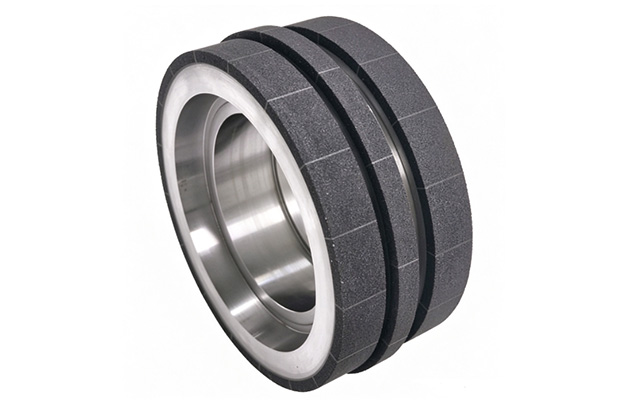
Features & advantages: High porosity, strong heat dissipation, excellent chip clearance, good chemical stability, easy to dress and true, stable cutting performance.
Suitable applications:
For grinding hardened steel, high-speed steel, tool steel (CBN vitrified wheels are widely used for grinding these materials).
Versatile for both rough and precision grinding. For creep-feed grinding, surface grinding and cylindrical grinding operations which require medium-to-heavy stock removal.
With excellent dimensional stability, it is highly suitable for high-precision form grinding.
Limitation: The surface finish achieved by vitrified bond wheels is not goods as resin bond wheels. The vitrified bond wheels are not recommended for ultra-thin fragile workpieces which are easily chipping.
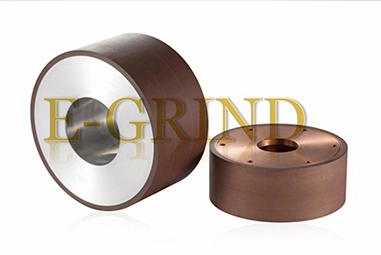
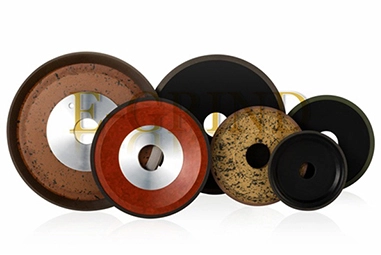
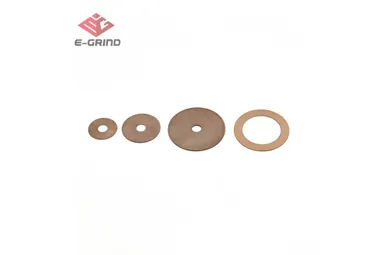
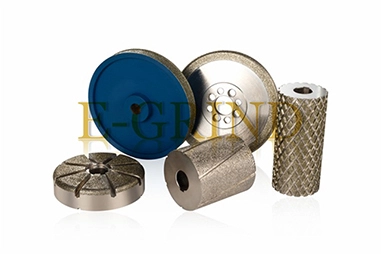
Metal Bond Superabrasive Wheels
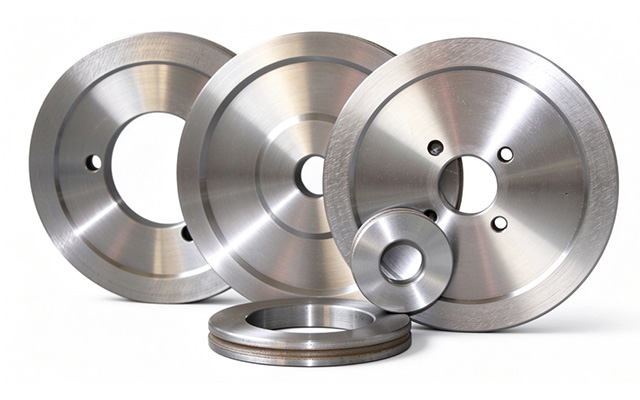
Features & advantages: Extremely high bond strength, high wear resistance, long wheel life, high structural rigidity.
Suitable applications:
For grinding hard and brittle materials such as cemented carbide, ceramics (especially hard ceramics like SiC and aluminum nitride), glass/quartz, ferrite, gemstones, and composite sheets.
The strong profile retention capability makes it suitable for form grinding and precision profile grinding.
Suitable for roughing/edge sharpening and heavy-stock grinding; highly stable and well-suited for high-load material removal.
Limitation: Relatively poor self-sharpening. The dressing of metal bond wheels is very difficult. If not dressed in a timely manner, there is risk of burning the workpiece surface. Therefore, metal-bond wheels are not suitable for machining heat-sensitive materials or precision surfaces.
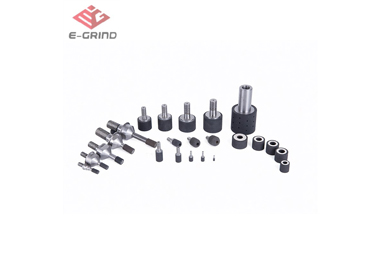
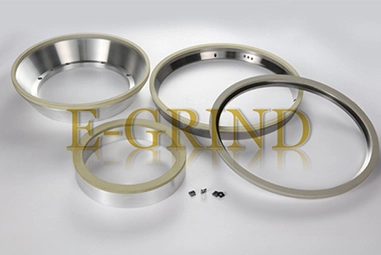
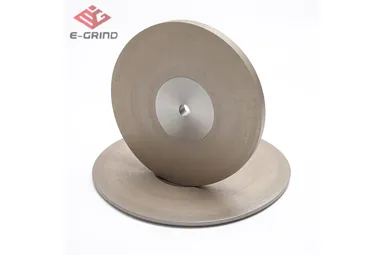
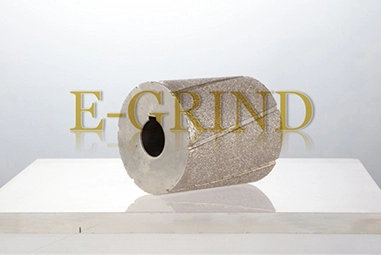
Electroplated Superabrasive Wheels
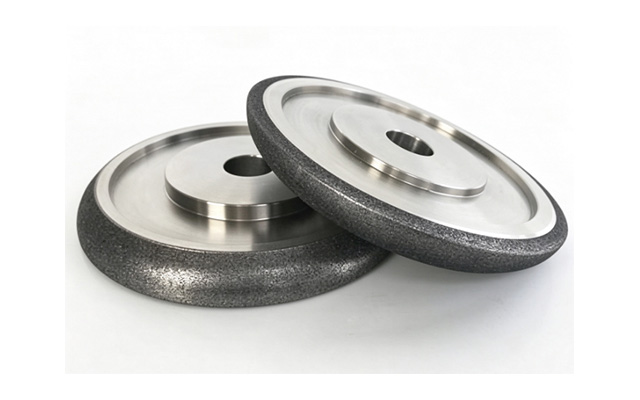
Features & advantages: Single abrasive layer, sharp cutting edge, no need for complicated dressing, high form retention, low cost for complex profiles.
Suitable applications:
Widely used for grooving, chamfering, and edge grinding of glass, magnetic materials, cemented carbide, ceramics, gemstones, and other materials.
For high-speed precision grinding and form grinding.
Capable of producing complex-profile superabrasive tools (e.g., small mounted points, core drills, cutting saw blades).
Limitations: Insufficient grit retention, easy grit shedding under heavy loads, thin working layer decides the short service life; Surface roughness at the same grit size is relatively poorer than resin bond.
Grit Size Selection: Why we need to confirm workpiece material, hardness, surface finish and grinding allowance?
Grit size essentially refers to the size of individual abrasive grains, which directly determines cutting edge sharpness and surface quality. Incorrect grit selection leads directly to the consequences: scratching, edge chipping, inability to cut, and rapid abrasive wear.
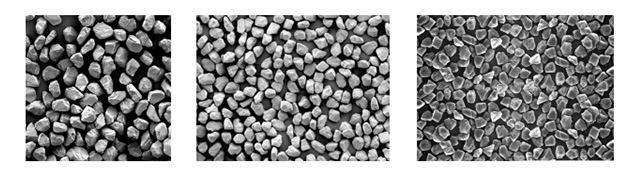
Workpiece material and hardness: determines "whether it can cut and whether chipping occurs"
High-hardness brittle materials (e.g., cemented carbide, ceramics): fine grit is required. The lower cutting force per grain reduces the risk of edge chipping and microcracking. Coarse grit tends to cause edge fracture in brittle materials.
Ductile/soft materials (e.g., aluminum alloys, stainless steel): coarse grit can be used. Larger chip clearance prevents loading and improves removal efficiency. Fine grit tends to load or smear on soft materials.
2. Grinding allowance: determines "efficiency priority vs. quality priority"
Large grinding allowance: coarse grit. Bigger depth of cut per grain enables high material removal rate, suitable for rapid stock removal.
Small grinding allowance/finishing: fine grit. Smaller depth of cut allows control of dimensional accuracy and surface roughness.
3. Surface finish requirements: determines "what the final surface looks like"
Low Ra/Rz requirement: fine grit is mandatory. Finer grains produce shallower grinding marks and lower surface roughness.
Coarse grit inevitably leaves deeper grinding marks and poorer finish. This is a physical constraint that cannot be fully compensated by other parameters.
4. Direct consequences of incorrect grit selection
Scratching: excessively coarse grit, or oversized grit in the size distribution, leaves deep scratches on the workpiece surface.
Edge chipping: coarse grit used on high-hardness brittle materials concentrates cutting forces and causes edge fracture.
Inability to cut: fine grit used on soft materials clogs chip clearance spaces, causing the wheel to skid rather than cut.
Rapid abrasive wear: when grit is mismatched to the application, grains experience abnormal impact or friction and fail prematurely.
Concentration Selection: Why we are cautious about choosing high concentration in the first trial?
Concentration is defined as the volumetric proportion of abrasive in the working layer (e.g., C100 = 4.4 ct/cm³). A common misconception is "higher concentration = more grains = faster cutting," but the actual relationship is often the opposite.
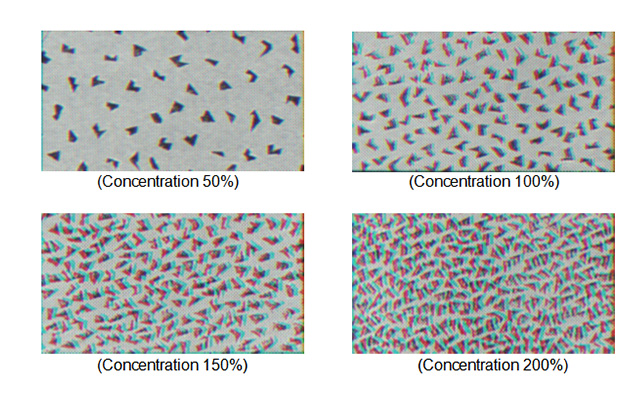
1. High concentration sacrifices "sharpness"
Higher concentration means smaller grain spacing and reduced chip clearance. Chips cannot be evacuated smoothly, and coolant cannot penetrate the grinding zone. The result:
Although there are more grains, the effective depth of cut per grain decreases, and grinding energy is converted more into heat than into material removal.
The wheel behaves as "not sharp"—it skids, fails to cut, and grinding forces actually increase.
2. The goal of the first test is to "find the boundary," not "push the limit"
Starting with a medium-to-low concentration (e.g., resin bond ~75% for precision grinding) allows verification of whether the wheel self-sharpens properly on the workpiece, whether loading occurs, and whether heat is controllable.
If a high concentration is used from the start:
Once loading or burning occurs, it is impossible to isolate whether concentration or other parameters (grit, bond, cooling) are responsible, confounding troubleshooting.
High-concentration wheels carry higher cost, so a failed first test means higher trial-and-error expense.
3. Coupling between concentration and grit size
Coarse grit requires relatively higher concentration to achieve removal efficiency; fine grit suits lower concentration. If the first test uses fine grit (common in precision grinding) combined with high concentration, grain density becomes excessive, chip clearance nearly disappears, and loading risk is extremely high.
Grit selection determines "how large a cutting edge is used," while concentration determines "how densely the edges are packed." The goal of the first test is to verify compatibility, not to extract maximum performance. Start with a medium concentration to keep the wheel sharp and chip evacuation unobstructed; once baseline grinding behavior is confirmed, fine-tune based on life or efficiency requirements—that is a controllable optimization path.
FINAL TIP FROM OUR TEAM
There is no universal best superabrasive wheel. The optimal solution always comes from matching bond, grit and concentration to your machine, coolant, cut depth and workpiece material.
Contact us to get customized grinding wheel recommendations for your project!
References
NEXT: No information